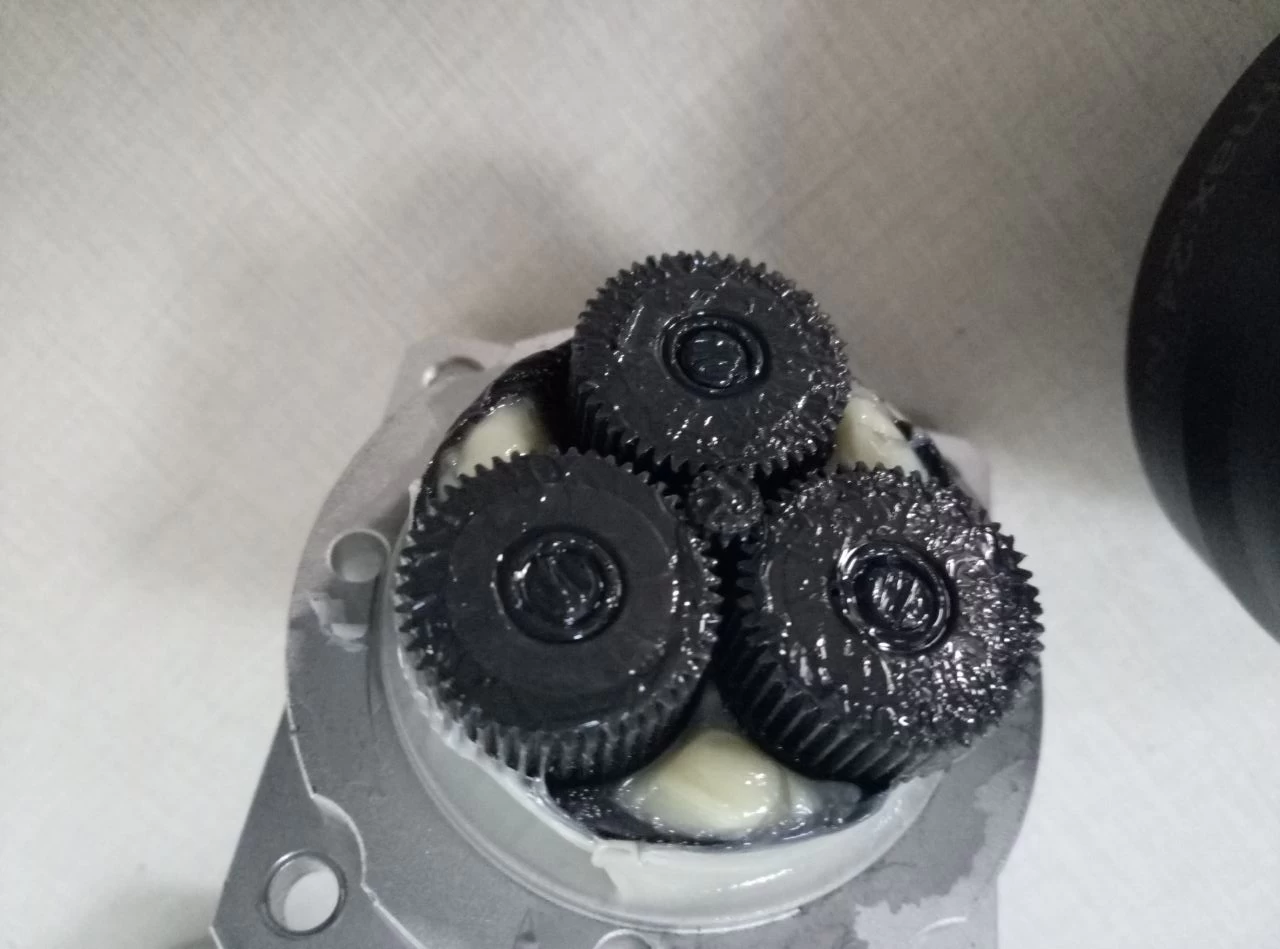
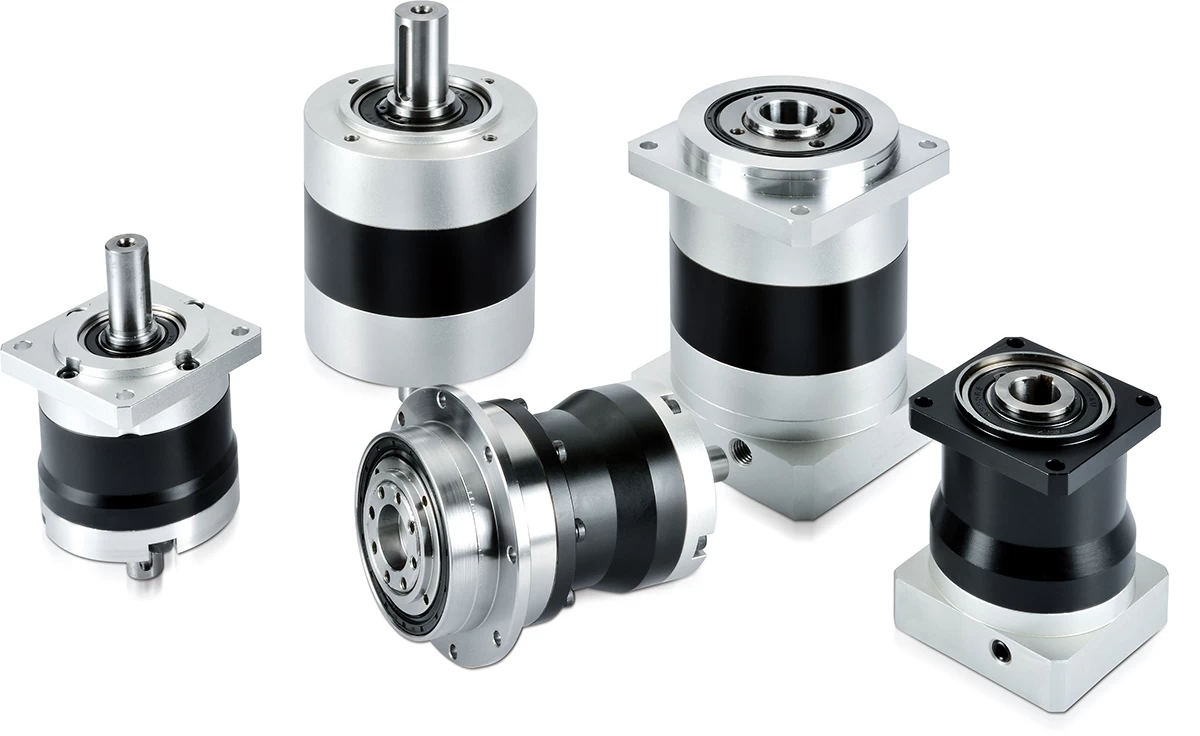
In automated equipment, robots, numerical control, and semiconductor equipment, planetary reducers are long-term subjected to alternating loads, start-stop shocks, and high-temperature environments. More than 90% of failures are concentrated in four major categories of components: gears, bearings, shafts, and seals. Understanding typical damage characteristics enables quick problem location and reduces downtime losses.
1. Gear damage: the most common and most impactful
- Tooth surface pitting / spalling
- Characteristics: Pitting and small pits appear on the tooth surface, and in severe cases, the surface layer peels off in patches; operating noise increases and vibration rises.
- Cause: Long-term high load, poor lubrication, oil film rupture, and direct metal contact resulting in fatigue pitting.
- Root crack / Broken tooth
- Characteristics: Cracks appear at the tooth root, and in severe cases, the entire tooth fractures; accompanied by periodic impact sounds, laggy operation, and unstable output.
- Cause:
- Overload / Impact: Frequent start-stop, sudden stop, and machine collision, with instantaneous torque reaching 4–6 times the rated value;
- Material / Inadequate heat treatment: substitution of alloy steel with ordinary steel, substandard carburizing and quenching;
- Assembly eccentricity: uneven load on planetary gears and local stress concentration.
- Tooth surface gluing (scuffing)
- Characteristics: Striped scratches and metal transfer appear on the tooth surface, and in severe cases, adhesion and seizure occur.
- Cause: High speed + heavy load + lubrication failure, with instantaneous high temperature leading to melting and adhesion of tooth surface metal.
2. Bearing Damage: The Main Source of Vibration and Temperature Rise
- Rolling track fatigue spalling
- Features: increased vibration, abnormal noise, temperature rise; bearing characteristic frequencies can be seen in spectrum analysis.
- Causes: long-term alternating load, lubrication contamination, and poor installation coaxiality.
- Cage fracture / wear
- Symptoms: A "huā lā" abnormal noise occurs during operation, which is more obvious at low speeds; in severe cases, there is jamming and output jitter.
- Causes: Impact load, insufficient lubrication, improper assembly clearance.
3. Shaft damage (sun gear shaft / output shaft)
- Journal crack / shaft breakage
- Characteristics: Input rotates, output does not rotate; or load end jitters, positioning fails.
- Cause:
- The selected model is too small and has been overloaded for a long time;
- Poor installation coaxiality and excessive radial force;
- Instantaneous impact caused by emergency stop / collision.
4. Failure of Seals and Housings
- Oil seal aging / oil leakage
- Characteristics: Oil leakage at the output end, oil accumulation in the housing; long-term effects lead to insufficient lubrication and accelerated gear wear.
- Causes: high temperature, oil deterioration, dust intrusion, and installation eccentricity.
- Shell deformation / cracking
- Characteristics: Flange face deformation, misalignment of mounting holes; accompanied by vibration, abnormal noise, and seal failure.
- Causes: Overload impact, overtightening of mounting bolts, and insufficient material strength.
Summary
Damage to reducer partsis not caused by a single factor, but rather the comprehensive result of "selection - installation - lubrication - operating conditions". In actual maintenance:check for wear on gear surfaces, listen for abnormal noises from bearings, observe jitter in shafts, and check for leaks in seals, which can quickly identify the core issues and prevent minor faults from evolving into complete machine failure.